
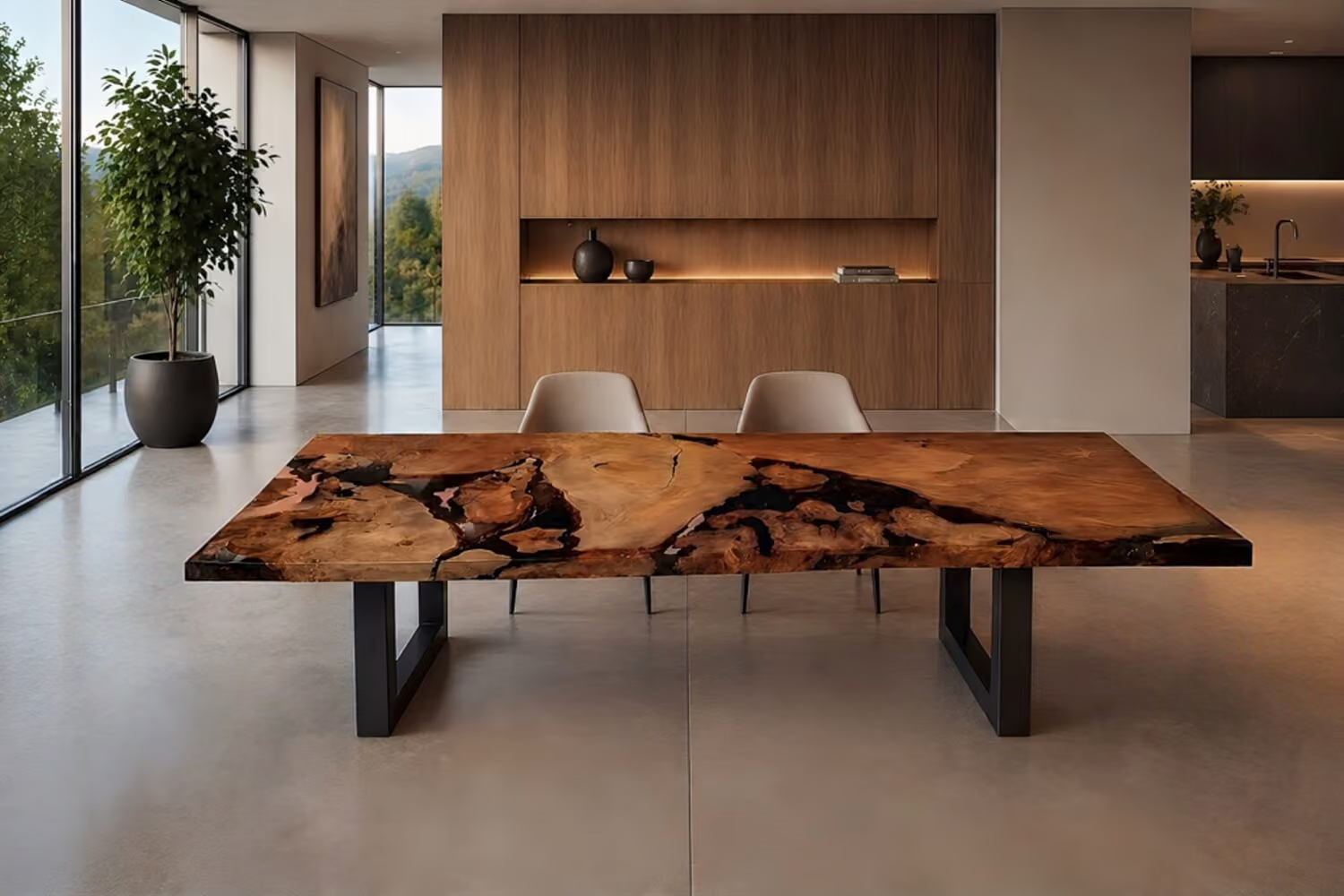
One-of-a-Kind 191 – Designer Dining Table with Tangible Value and Cartographic Topography
From a root slab originally measuring 280 × 210 cm and made of 3,700-year-old ancient kauri, Beaupoil crafted a 280 × 100 cm designer dining table featuring gold-colored amber inclusions.
The rare combination of materials, the individual craftsmanship, and the documented provenance give Collectible Design objects made from ancient kauri burl wood their unique qualities. These qualities also make these pieces attractive from the perspective of tangible assets, potential investment, and long-term value retention.
Unique Item 191 illustrates this relationship.
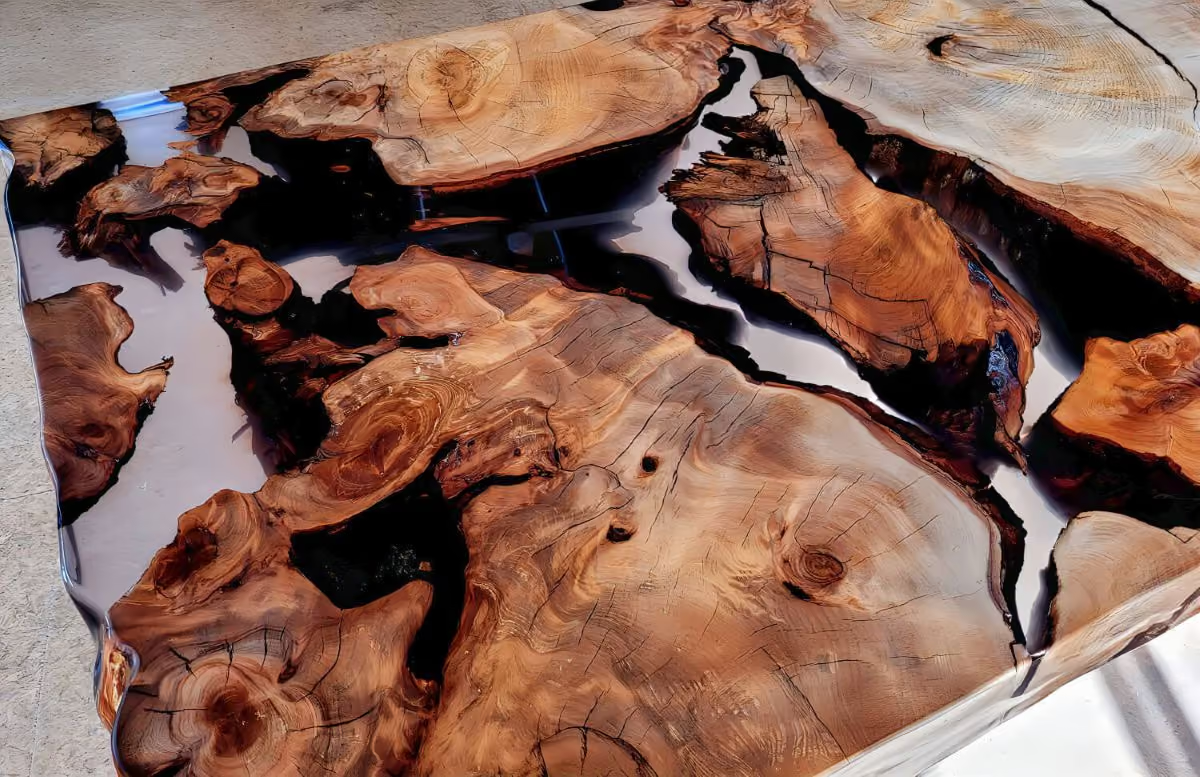
Unique kauri burl wood for one-of-a-kind design pieces with tangible value.
A collector's item shaped by nature's topography
A unique designer dining table featuring bark and amber
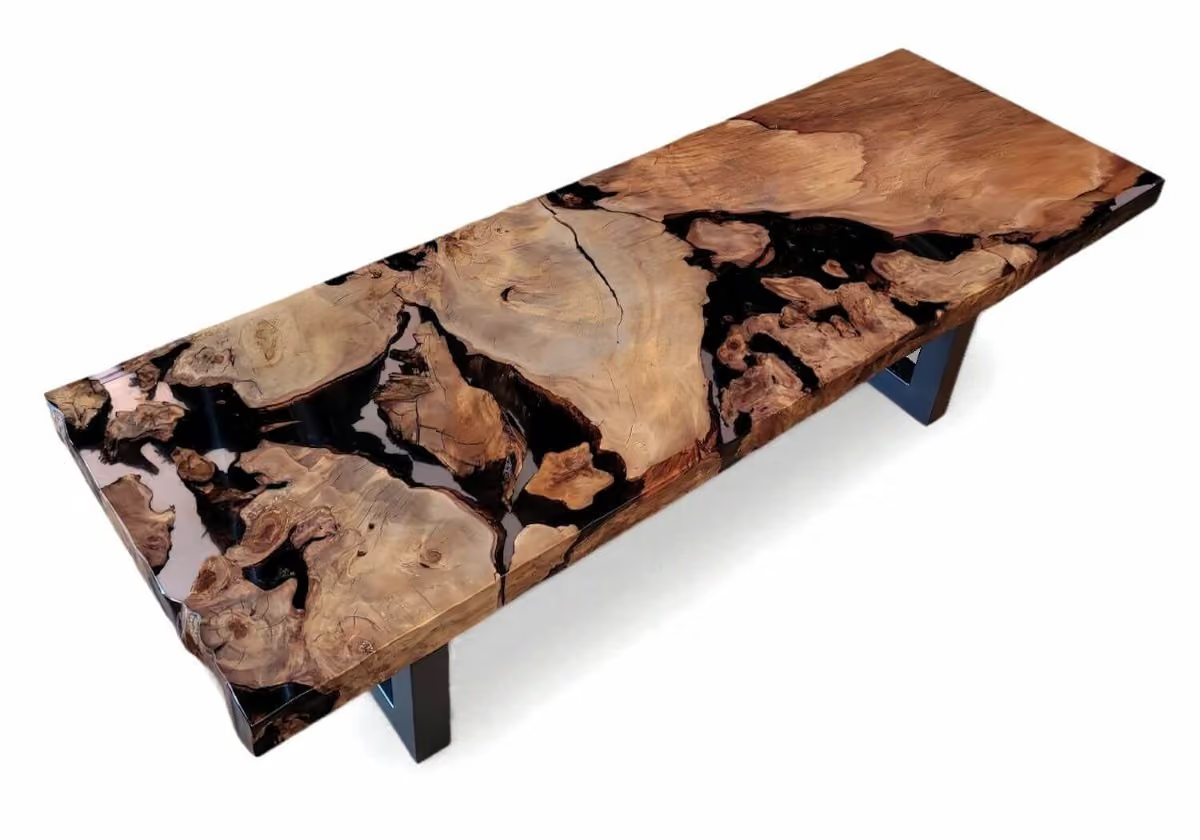
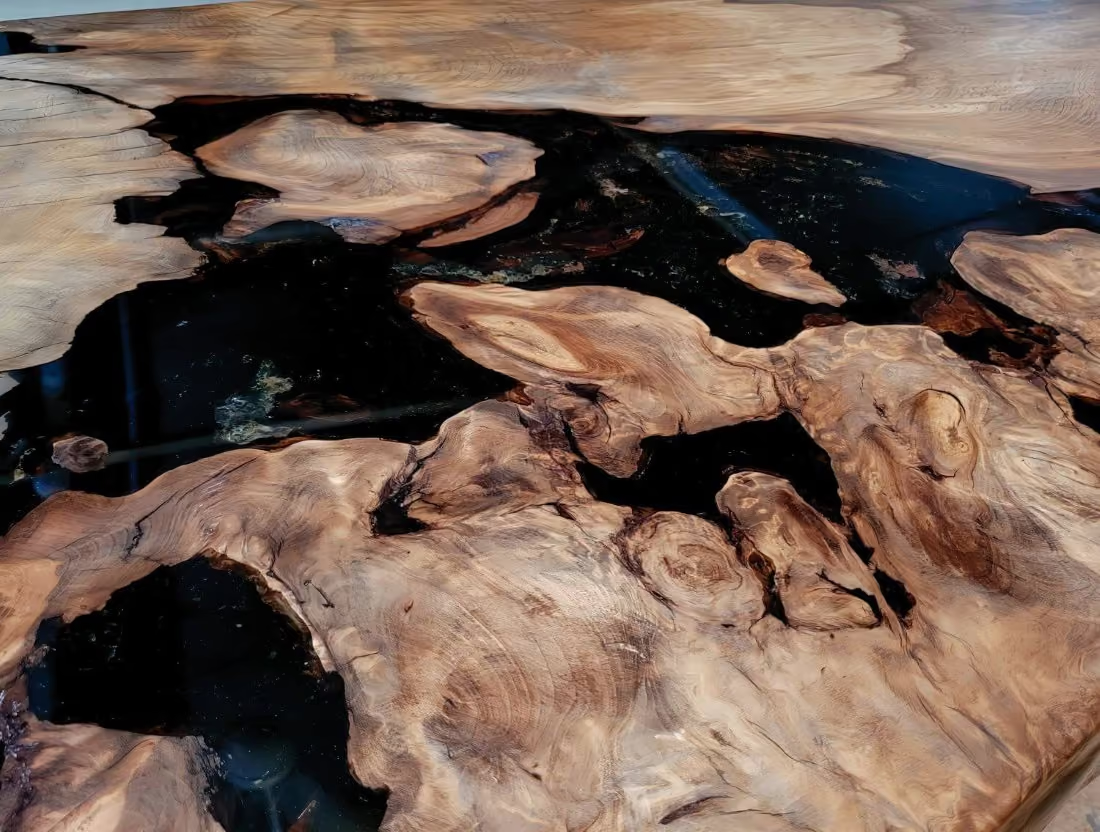
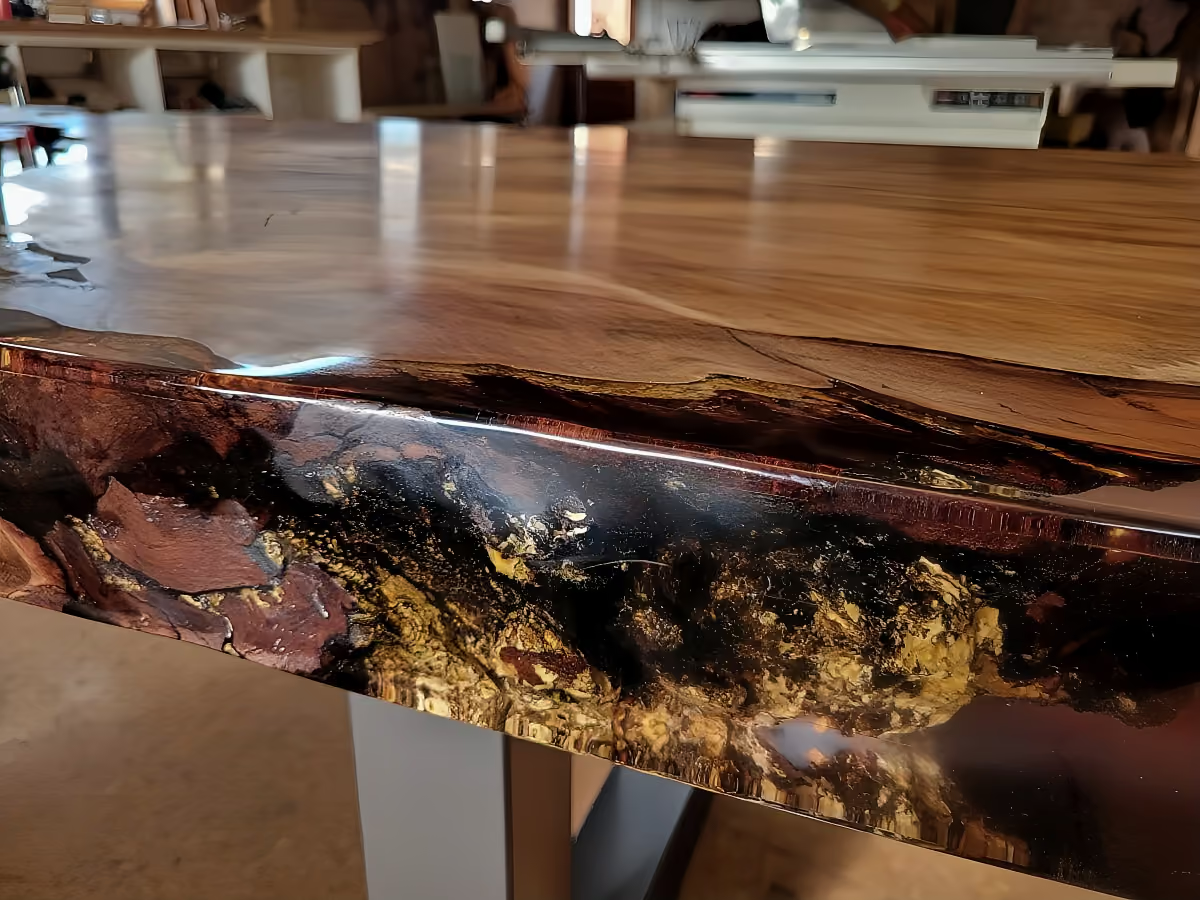
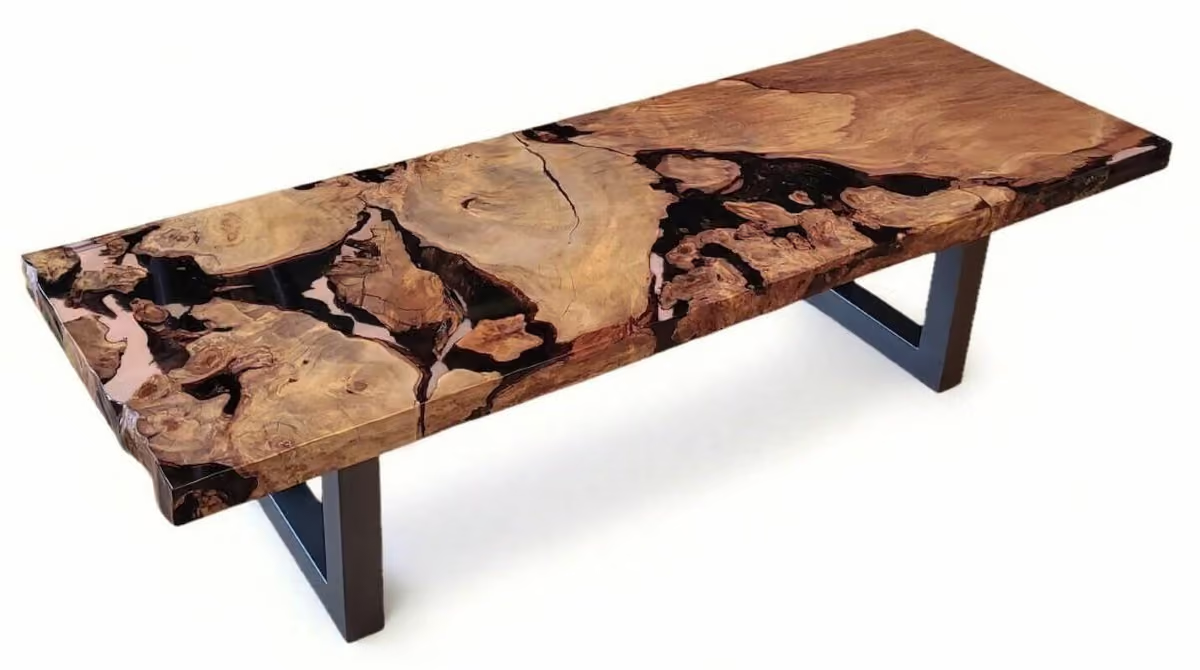
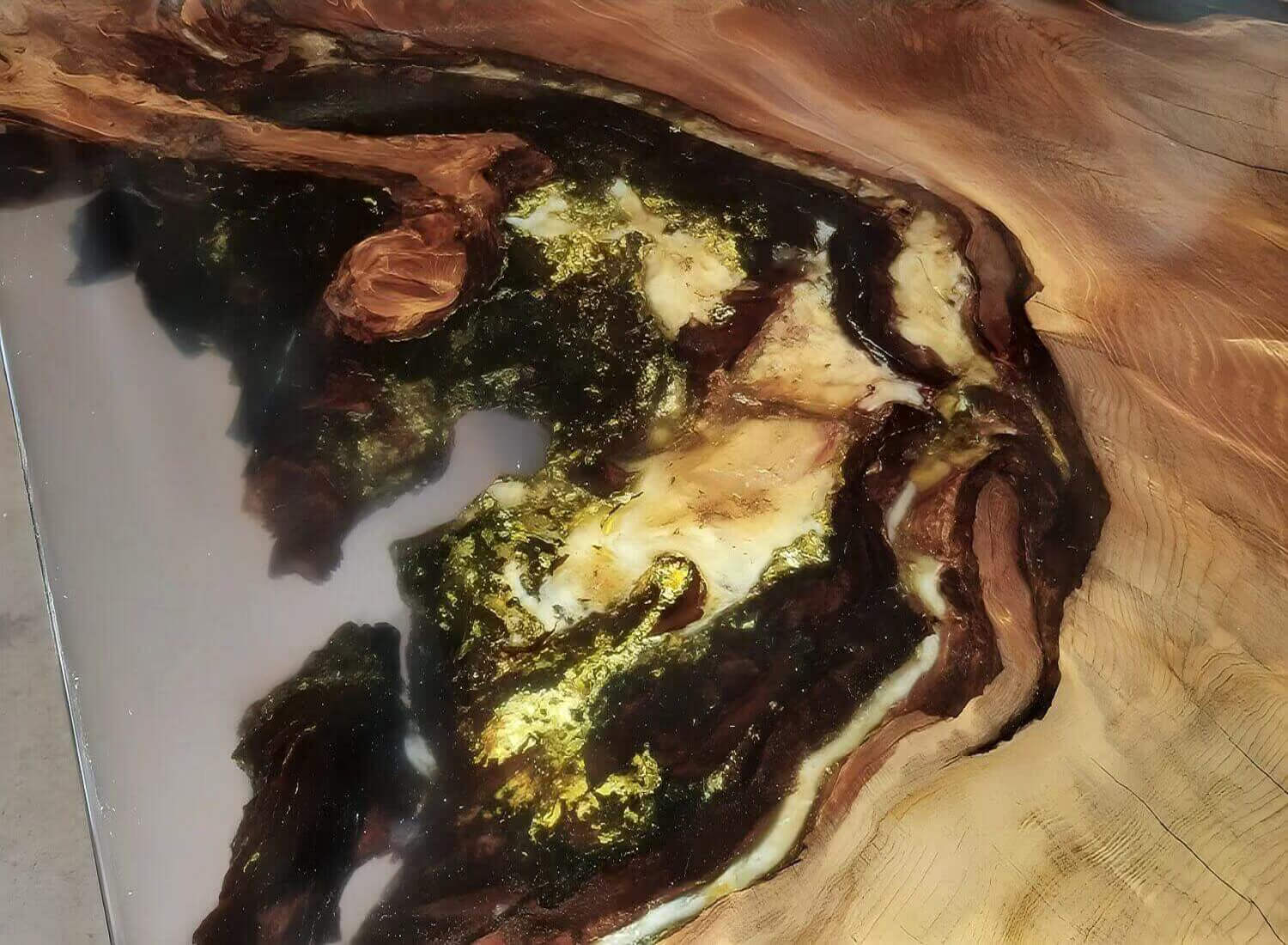
The surface of this unique burl wood table, featuring an 8-cm-thick tabletop, resembles a map created by nature. Light-colored areas and dark bark embedded in high-quality epoxy resin form a varied pattern reminiscent of coastlines, archipelagos, or geological maps. Gold-colored amber inclusions add striking accents.
This cartographic order was not designed by humans. It emerged from the original root formation and forms the structural foundation of the entire work.
Inner Worlds of Materials
Exposed root systems and varying depths create an extraordinary landscape
The aesthetically pleasing tabletop offers a view deep into the interior of the original root. Sections of bark, cavities, and preserved root structures are situated at different levels.
Beaupoil stabilizes and seals these open areas with transparent epoxy resin. The clear filler preserves the view into the depths of the precious material. The underlying structures become visible, giving the surface an extravagant three-dimensional effect. Gold-colored amber inclusions add special accents.
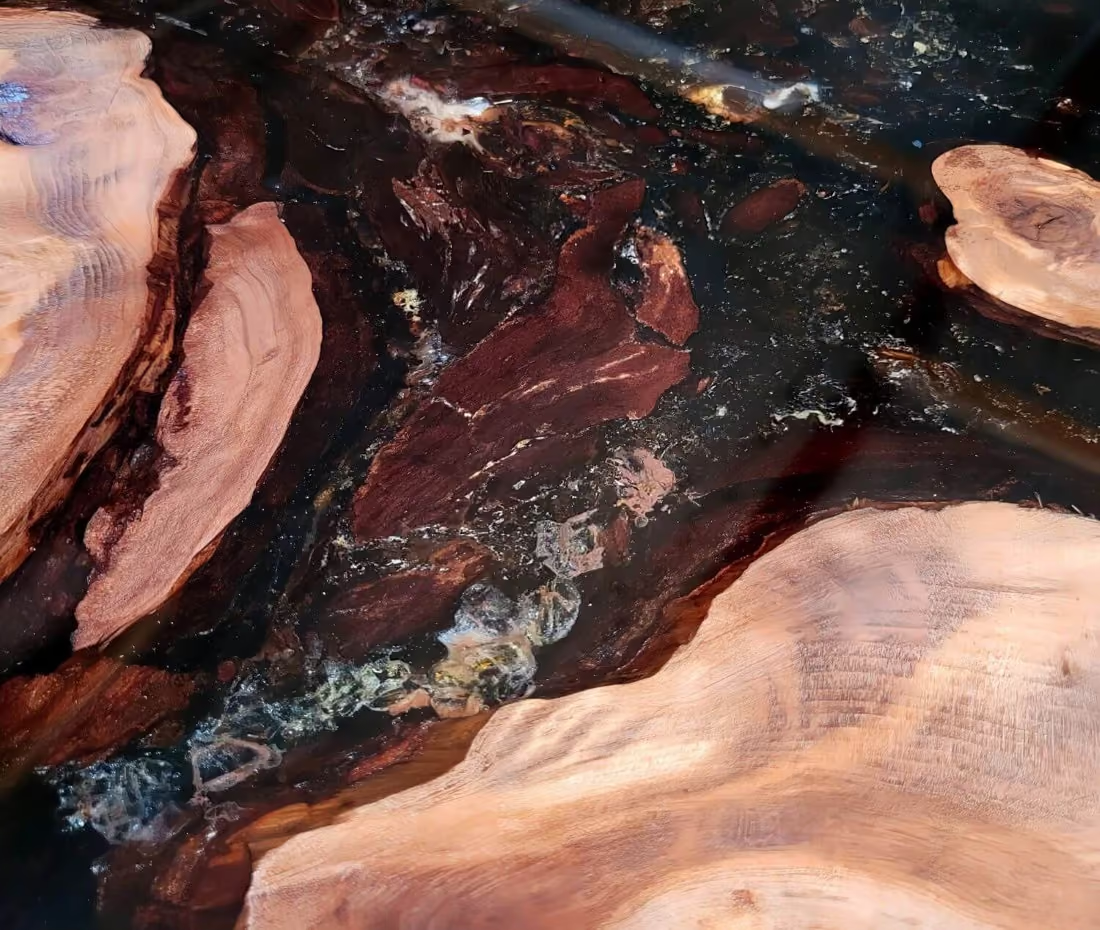
What appears to be a landscape is the memory of the growth of a tree that is thousands of years old.
Nature's Creative Power
Unique Natural Forms and Functional Art
The distinctive visual language does not stem from a predefined pattern, but rather from the organic forms of the root plate. Beaupoil refines the existing topography in his studio and transforms it into a functional dining table. In doing so, he deliberately ensures that the natural arrangement of the forms remains clearly visible.
This gives the piece its unique status as both a sculptural collector's item, functional art, and an exclusive collectible design.
Workflow
From solid root wood to high-quality designer furniture
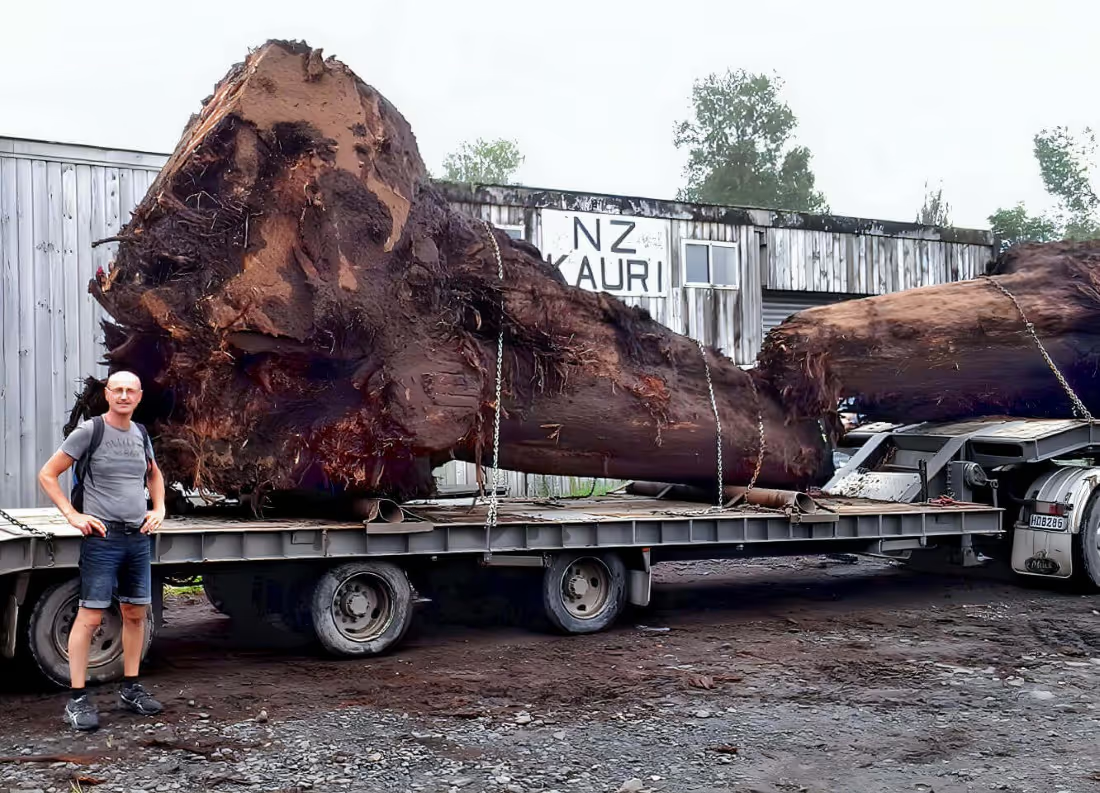
The original root slab, measuring 280 × 210 cm, already revealed the open root cavities, amber zones, and internal structures of the finished piece. Photographs document this initial state and show that the unique arrangement of materials was already present before any work was done on it. Master carpenter Beaupoil skillfully transformed it into a sculptural piece of designer furniture in his studio.
The traceable history of the work's creation reinforces its identity and complements its potential as a tangible asset investment.
Unique Piece 139 serves as an example of the journey from the site where it was found to the finished work.
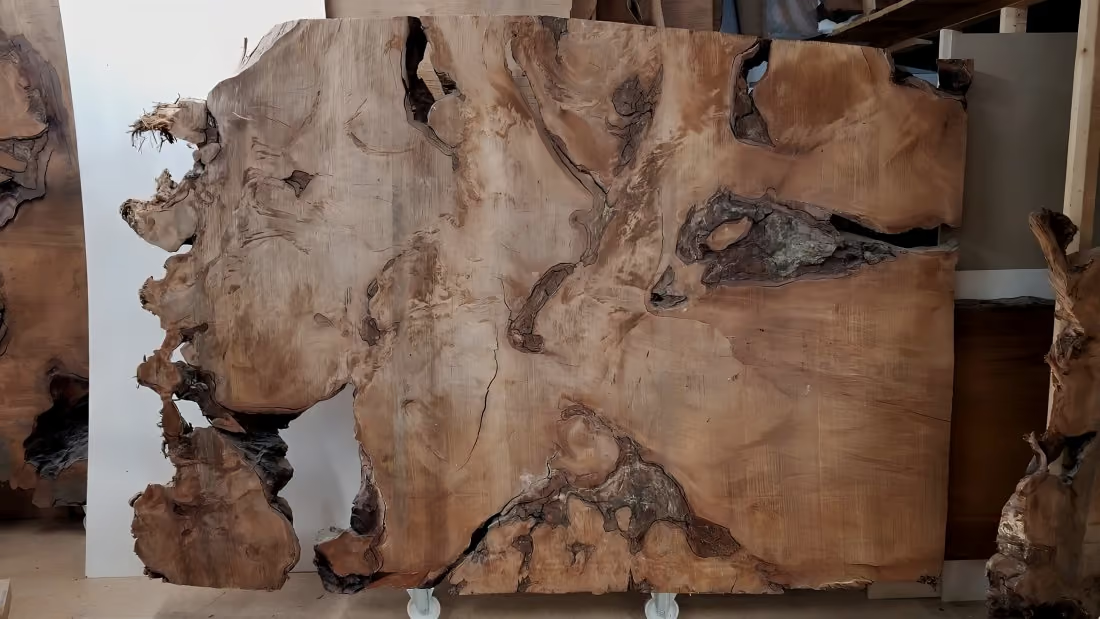
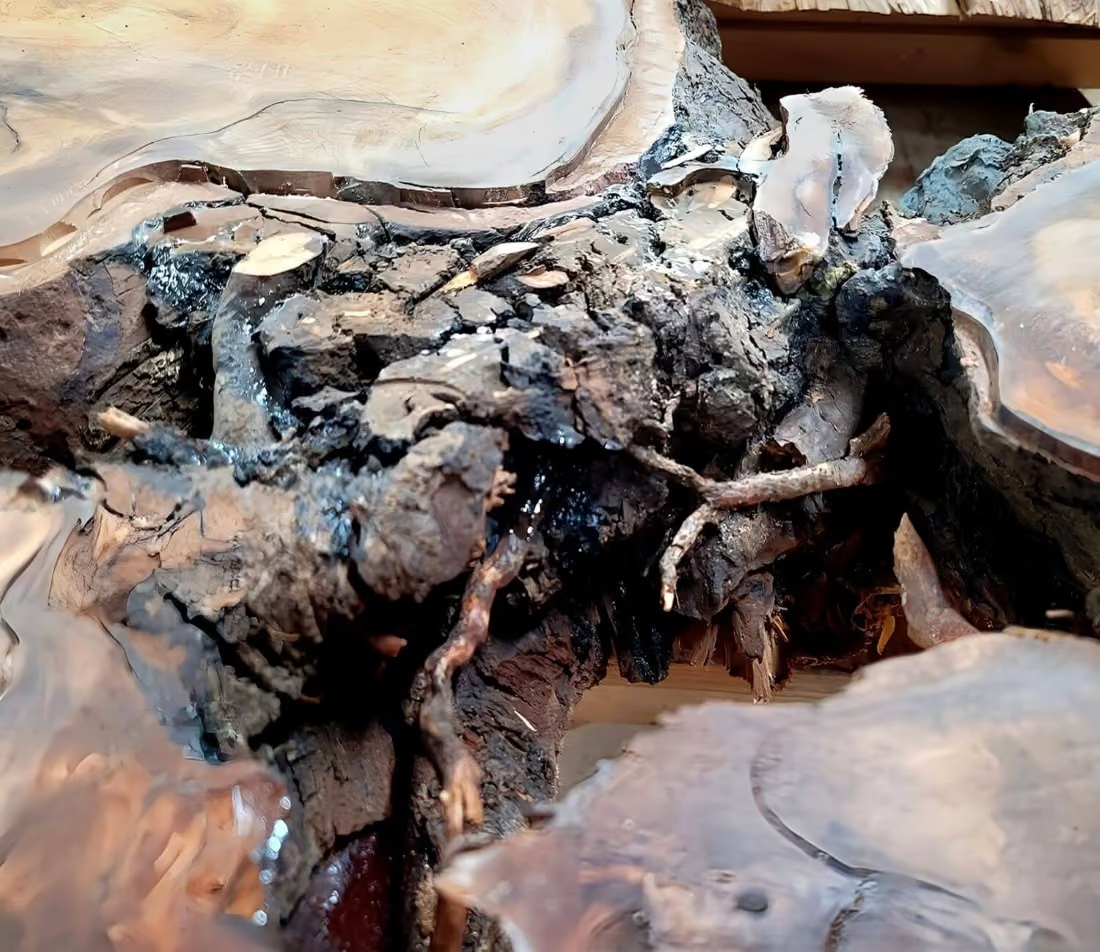
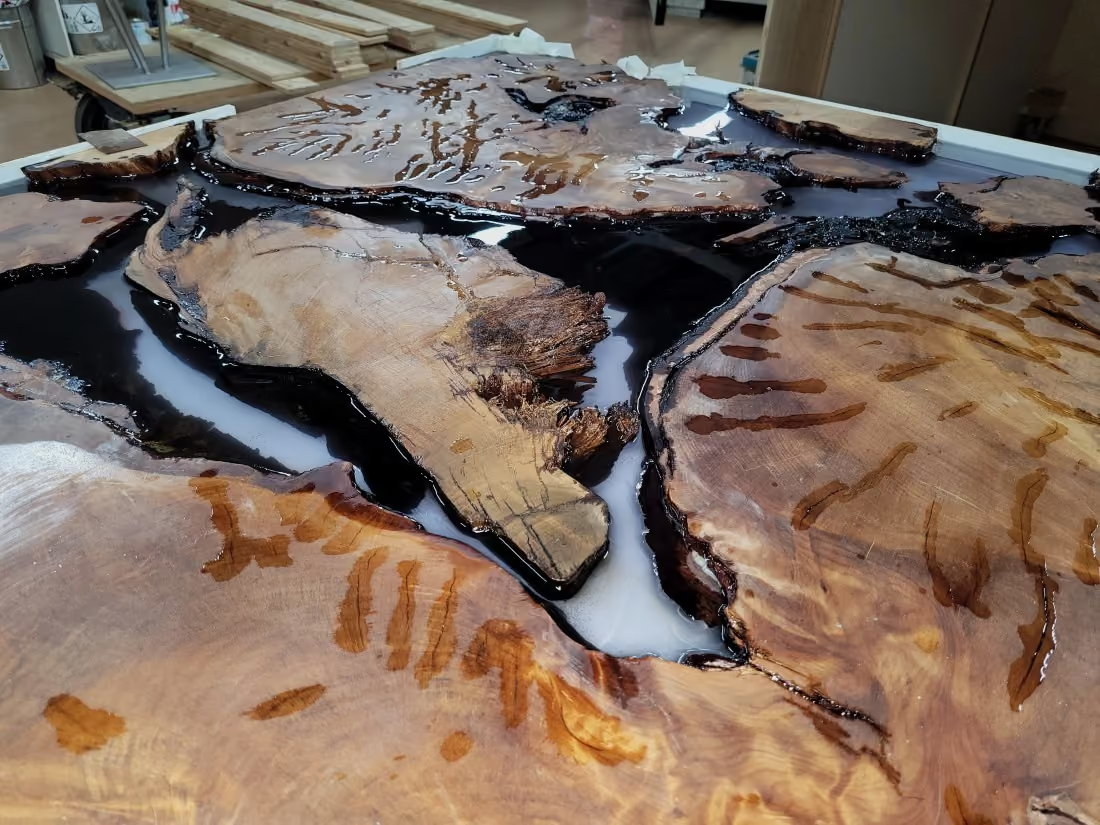
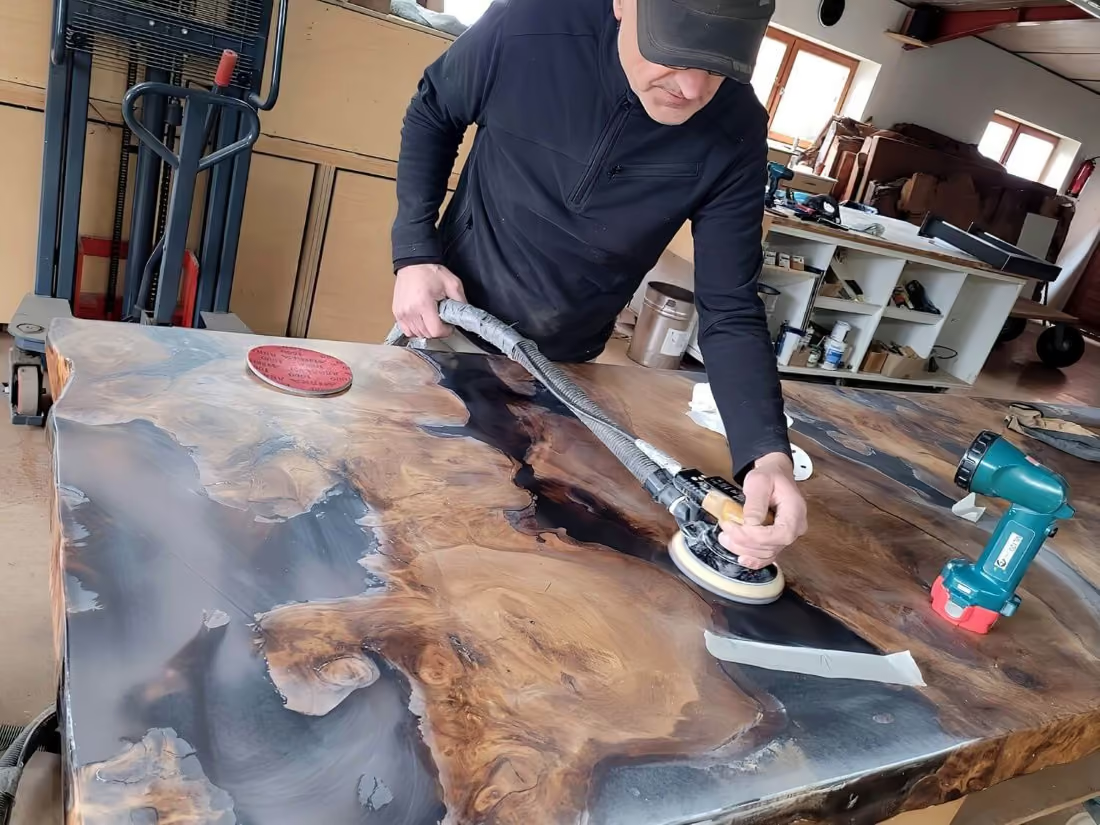
Certificate of Age & Provenance
A collector's item with 3,700 years of material history
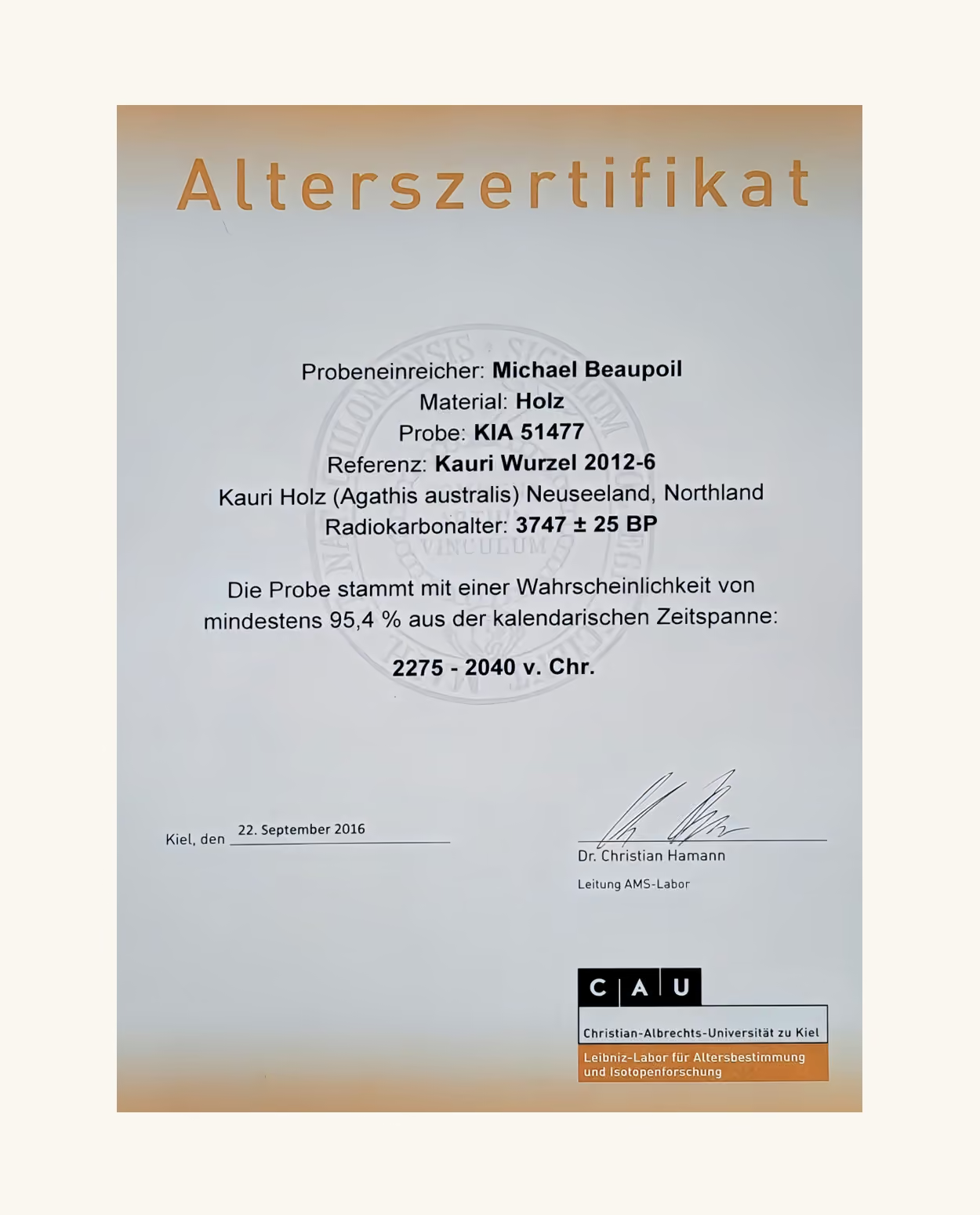
A material sample from Unikat 191 was analyzed at the Leibniz Laboratory for Age Determination and Isotope Research at Christian-Albrechts University in Kiel. Radiocarbon dating indicates that the sample is 3,700 years old. The age certificate documents this result and provides a scientifically verified chronological context for the work’s provenance.
The traceable history of the material is also an important aspect of its value as a collector's item and as an asset.
Spatial Context
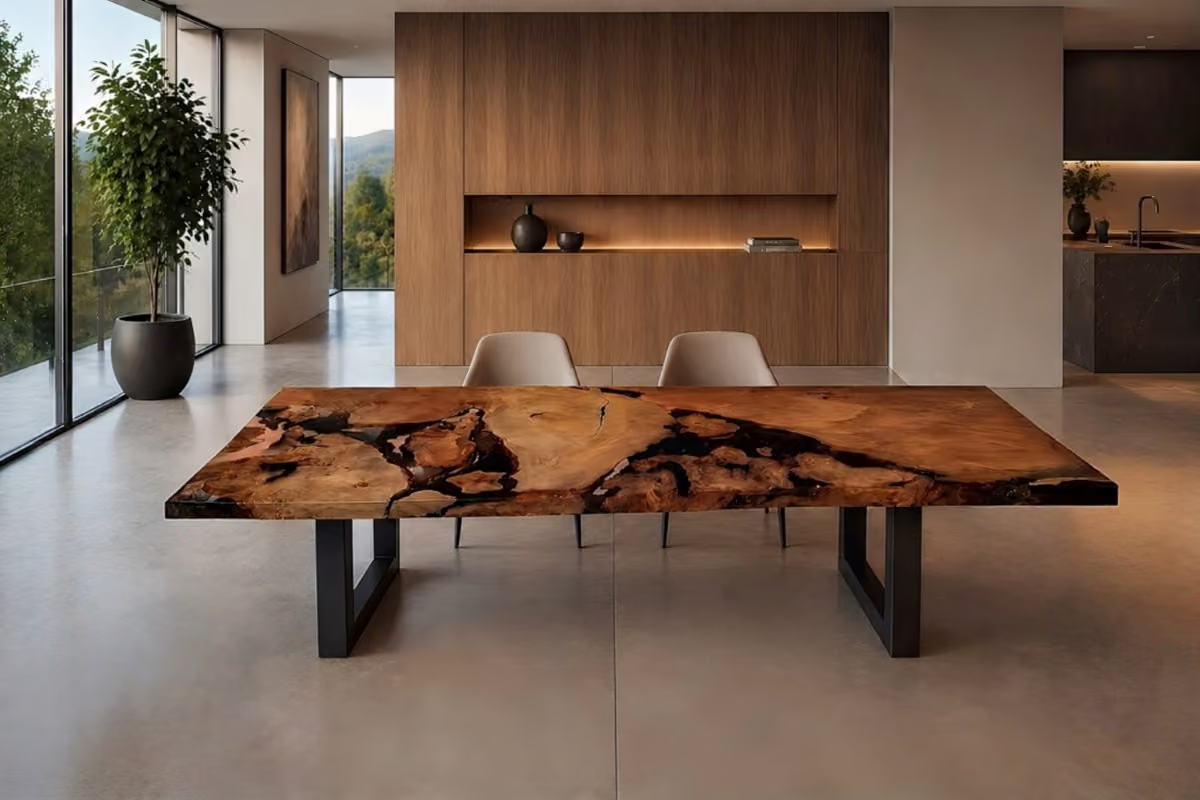
A sculptural designer dining table for exclusive architectural living spaces
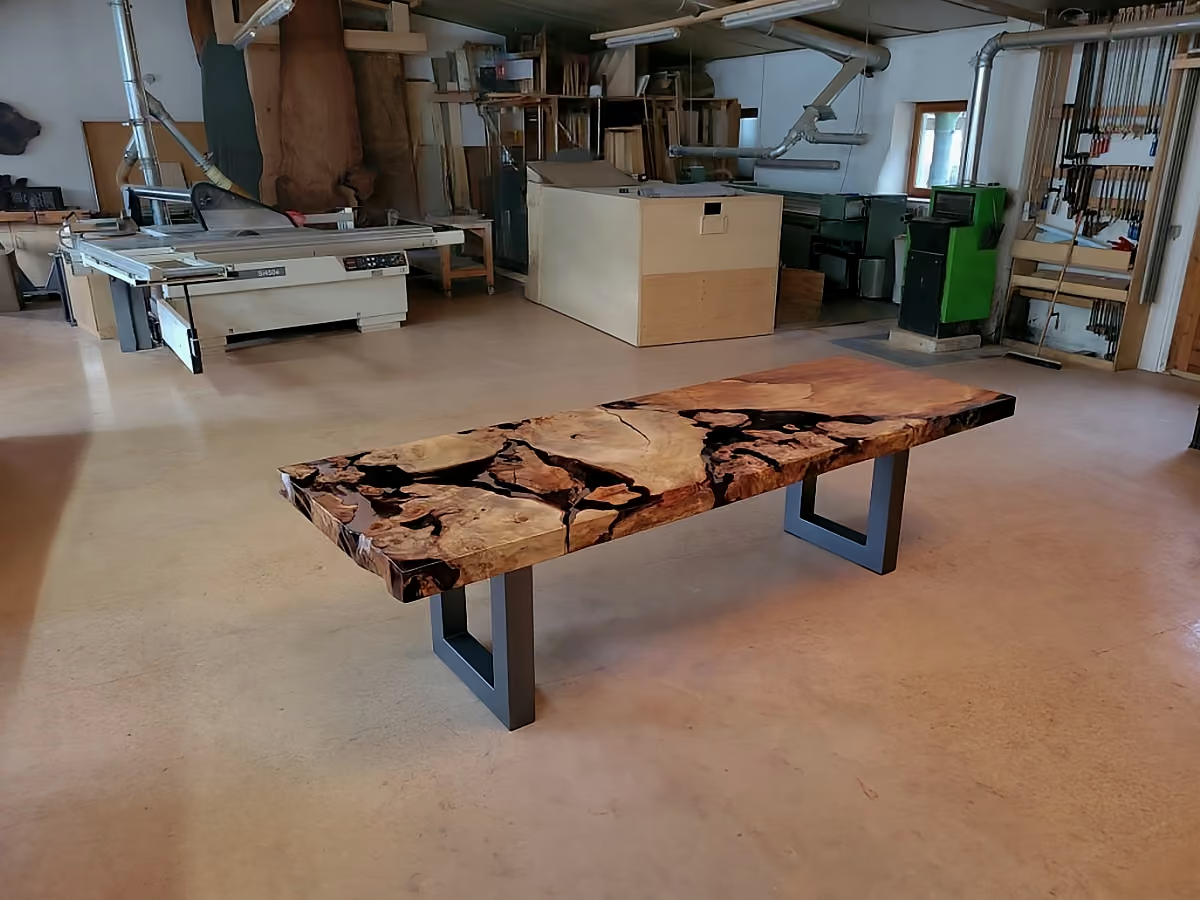
With its elongated shape and distinctive material composition, the Unikat 191 serves as both a sculptural dining table and a standalone architectural collector’s item.
In minimalist living spaces, libraries, private collections, or high-end gallery interiors, this exquisite tabletop makes a striking statement. As an exclusive piece of designer furniture, it combines practical functionality with an extraordinary visual impact in any space.
Collectible Design and Collectible Appeal
A cartographic rarity with a unique history of its materials
The cartographic aesthetic makes this piece unmistakable within its original root formation. Beaupoil has transformed it into a functional designer dining table that also serves as a sculptural collectible design object. Its uniqueness lies in the interplay of natural form, documented material history, and artisanal craftsmanship.
Material and Intangible Value
Collectible Design as a Tangible Asset—When Does a Design Object Become a Tangible Asset Investment?
An exceptional collectible design object may possess intrinsic value beyond its aesthetic and functional merits. Rarity, material quality, artistic originality, and a verifiable provenance can shape the material and intrinsic value of a work.
These characteristics are evident in the Unikat 191. They make such pieces attractive not only as valuable collector's items but also as potential investments in tangible assets, especially since they can be restored at any time as heirlooms that span generations.

Design objects with unique characteristics
What characteristics define the nature of a tangible asset?
The following characteristics are particularly important for classifying a collectible piece of designer furniture:
- A Rare Natural Material: Ancient Kauri is a subfossil material with limited availability.
- Natural Uniqueness: The aesthetic root structure cannot be replicated.
- Artistic Design: Beaupoil creates a unique piece of designer furniture based on a natural model.
- Craftsmanship: The custom craftsmanship combines natural materials with functional design.
- Documented provenance: A certificate of age and photographs taken during the production process document key aspects of the material's history.
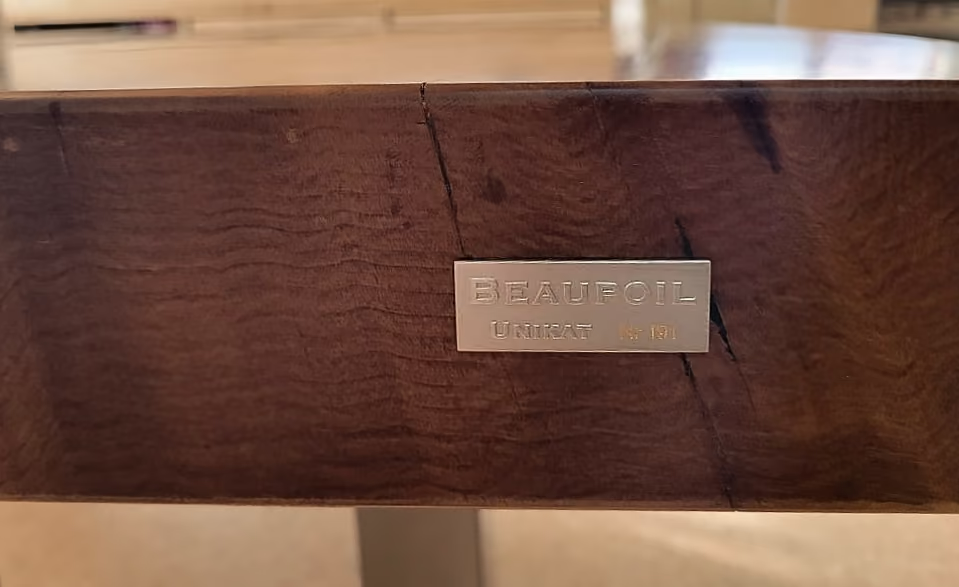
- Unique Work Identification: Each work is assigned its own unique number, which allows for its individual identification and classification.
- Collectors' Interest: Rarity, identity, and artistic originality can influence a work's collectible value and long-term value stability.
Tangible Assets, Gold, and Inflation—Their Importance for Preserving Value Over the Long Term
Traditional tangible assets include real estate, gold, and other precious metals. In the realm of unique collectibles, jewelry, gemstones, works of art, antiques, classic cars, and luxury watches are also considered potential tangible asset investments. Collectible Design complements this spectrum by combining rare natural materials, artistic design, and high-quality craftsmanship.
Tangible assets are often considered in the context of inflation and the long-term preservation of wealth. Gold is traditionally regarded as a potential hedge against inflation. Rare design objects can also be of interest from the perspective of preserving value.
However, actual performance depends in particular on demand among collectors and resale opportunities.